

Introduction
Stumped by the little italian toasts nyt crossword clue? The answer you’re searching for is CROSTINI — an elegant eight-letter solution that brings authentic Italian cuisine straight into your crossword grid.
In this comprehensive guide, you’ll discover exactly what crostini are, how they differ from their cousin bruschetta, why this answer fits perfectly into crossword construction, when and where this clue has appeared in major puzzles, and expert strategies for both solving and publishing crossword content. Whether you’re a casual solver looking for the answer or a food enthusiast curious about Italian appetizers, this guide delivers everything you need to know.
Immediate Answer: CROSTINI (8 Letters)
Answer: CROSTINI
- Letter count: 8 letters
- Grid format: C-R-O-S-T-I-N-I or CROSTINI
- Common clue variations: “Little Italian toasts,” “Little toasts, in Italian,” “Italian appetizers”
- Puzzle appearances: New York Times, Wall Street Journal, LA Times crosswords
- Pronunciation: kroh-STEE-nee (plural); kroh-STEE-no (singular: crostino)
This clue typically appears in Tuesday through Thursday puzzles when constructors introduce food-related vocabulary and foreign language terms that require moderate solving skills.
Why CROSTINI Fits the “Little Italian Toasts” Clue Perfectly
The Perfect Culinary Definition
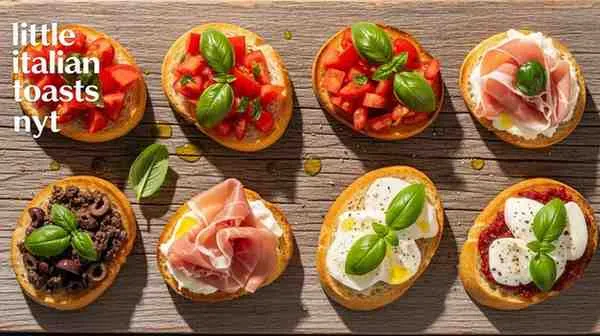
CROSTINI is the Italian word for small, thin slices of toasted or grilled bread, typically brushed with olive oil and topped with various ingredients. The name comes from the Italian word crosta, meaning “crust.”
The clue “Little Italian toasts” captures CROSTINI perfectly:
- “Little” — Crostini are bite-sized appetizers, smaller than their cousin bruschetta
- “Italian” — Authentic Italian cuisine terminology
- “Toasts” — Bread slices that are toasted or grilled until crispy
These traditional antipasti (Italian appetizers) are served at the beginning of meals, often topped with ingredients like tomatoes, cheese, pâté, or vegetables.
Crossword Constructor’s Perspective
Constructors favor CROSTINI because it:
- Fills eight spaces — Perfect for longer grid entries
- Contains useful vowels — Three I’s and one O help with crossing patterns
- Uses common letters — No obscure consonants that create solving bottlenecks
- Introduces cultural sophistication — Food terminology adds flavor to puzzles
- Has universal recognition — Most solvers familiar with Italian restaurants know this term
The clue works on multiple levels: it’s descriptive enough for solvers to work through logically, yet specific enough to point definitively toward CROSTINI.
What Are Crostini? A Culinary Deep Dive
Traditional Italian Appetizer
Crostini are a staple of Italian antipasto platters. These small toasts serve as edible platforms for countless topping combinations, making them versatile, elegant, and perfect for entertaining.
Classic preparation involves:
- Slicing bread: Use a baguette or ciabatta, cut into ¼ to ½-inch thick rounds
- Toasting: Grill or bake until golden and crispy
- Brushing with oil: Lightly coat with extra virgin olive oil
- Adding toppings: Apply spreads, vegetables, meats, or cheeses
- Serving immediately: Best enjoyed fresh and warm
Popular Crostini Toppings
Traditional and modern variations include:
- Classic tomato: Diced tomatoes, basil, garlic, olive oil
- Chicken liver pâté: Traditional Tuscan topping (crostini neri)
- Ricotta and honey: Sweet-savory combination
- Mushroom: Sautéed mixed mushrooms with herbs
- White bean: Tuscan white bean spread with rosemary
- Prosciutto and fig: Cured ham with fresh or dried figs
- Goat cheese and balsamic: Creamy cheese drizzled with reduction
The beauty of crostini lies in their versatility — they adapt to seasonal ingredients and creative combinations.
Etymology and Pronunciation
The word crostini (plural) comes from:
- Italian root: crosta (crust)
- Diminutive suffix: -ini (small)
- Literal meaning: “little crusts”
Singular form: crostino (one piece) Plural form: crostini (multiple pieces)
In crossword contexts, you’ll almost always see CROSTINI (plural) since it’s the standard menu term and fits eight letters perfectly.
Crostini vs. Bruschetta: Understanding the Crossword Distinction
Key Differences for Solvers
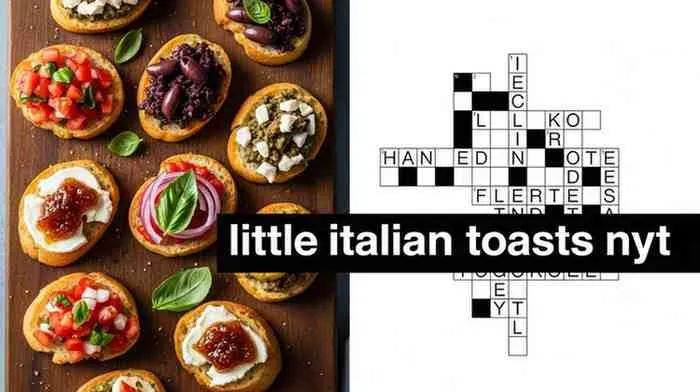
Many solvers confuse crostini with bruschetta. Understanding the distinction helps you solve food-related clues accurately:
CROSTINI (8 letters):
- Size: Small, bite-sized (1-2 inches)
- Bread: Baguette or small Italian bread, thinly sliced
- Preparation: Toasted until crispy, brushed with olive oil
- Toppings: Wide variety, often spreads or pâtés
- Serving style: Elegant, refined appetizers
BRUSCHETTA (10 letters):
- Size: Larger, substantial (3-4 inches or more)
- Bread: Rustic country bread, thicker slices
- Preparation: Grilled, then rubbed with raw garlic
- Toppings: Typically fresh tomatoes, basil, olive oil (though variations exist)
- Serving style: Rustic, hearty appetizer or light meal
Crossword Clue Patterns
How constructors distinguish between them:
For CROSTINI:
- “Little Italian toasts” (emphasizes small size)
- “Bite-sized Italian appetizers”
- “Italian hors d’oeuvres”
- “Antipasto items”
For BRUSCHETTA:
- “Italian appetizers” (no “little” qualifier)
- “Grilled bread with toppings”
- “Tomato-topped toasts”
The presence of “little” or “small” in the clue almost always indicates CROSTINI over BRUSCHETTA.
Culinary Context in Italian Dining
In authentic Italian meals:
Antipasto course: Both crostini and bruschetta can appear as appetizers Presentation: Crostini are more refined and delicate; bruschetta more rustic Regional variations: Crostini are especially popular in Tuscany and Northern Italy
Understanding this cultural context enriches your solving experience and makes the answer memorable.
Crossword Construction Notes: Food and Foreign Language Clues
How Constructors Clue Cuisine Terms
Food-related clues are crossword staples because they:
Connect to universal experience: Everyone eats, making food vocabulary accessible Introduce cultural diversity: Italian, French, Japanese, and other cuisines add sophistication Offer flexible difficulty: Can be clued directly (“Italian toast”) or obscurely (“Tuscan appetizer”) Fill various letter counts: Short (PIE, 3) to long (BRUSCHETTA, 10)
Italian Terms in Crosswords
Common Italian food answers you’ll encounter:
- PASTA (5) — “Rigatoni or penne”
- PESTO (5) — “Basil sauce”
- GELATO (6) — “Italian ice cream”
- RISOTTO (7) — “Creamy rice dish”
- CROSTINI (8) — “Little Italian toasts”
- PROSCIUTTO (10) — “Italian ham”
- BRUSCHETTA (10) — “Grilled bread appetizer”
Building familiarity with Italian culinary vocabulary dramatically improves your solving speed.
Pluralization in Foreign Languages
Crossword solvers should understand Italian plural patterns:
- -o → -i: crostino → crostini, biscotto → biscotti
- -a → -e: pizza → pizze (though “pizzas” is common in English)
- -e → -i: cannellone → cannelloni
CROSTINI uses the standard Italian masculine plural, making it grammatically correct and culturally authentic.
Tips for Solving Food Clues
When you encounter culinary crossword clues:
1. Consider letter count: Helps distinguish similar terms (CROSTINI vs. BRUSCHETTA)
2. Look for qualifiers: Words like “little,” “small,” or “bite-sized” guide you toward specific answers
3. Think about common menu terms: The answer is usually something you’d see in restaurants
4. Use crossing entries: Food words often have useful vowels that crossing clues reveal
5. Build your culinary vocabulary: Regular puzzle solving naturally teaches food terminology
Case Studies: Real Puzzle Appearances and Solver Insights
NYT Crossword Occurrences
The “Little Italian toasts” clue has appeared multiple times in New York Times crosswords, typically in mid-week puzzles. Solver communities track these appearances, documenting dates and providing solving statistics.
Common patterns when this clue appears:
- Day of week: Tuesday through Thursday (moderate difficulty)
- Theme relevance: Sometimes part of food-themed puzzles
- Crossing entries: Often intersects with other culinary or Italian terms
- Solver success rate: Moderate — familiar to food enthusiasts, challenging for others
Solver Community Feedback
Crossword forums reveal interesting insights about this clue:
“Aha moment” responses: Solvers familiar with Italian cuisine solve it instantly Education value: Many solvers learn about crostini through puzzles Common mistakes: Some initially try BRUSCHETTA (too long) or TOAST (too short) Appreciation: Food lovers enjoy seeing authentic culinary terms in puzzles
One experienced solver noted: “Once you learn the distinction between crostini and bruschetta, you never forget it. Crosswords teach practical knowledge.”
Grid Architecture Examples
When CROSTINI appears in puzzles, it often:
- Spans vertically or horizontally in mid-grid positions
- Crosses culinary terms like PASTA, PESTO, or OLIVE
- Helps solve tricky corners with its three I’s providing vowel support
- Anchors themed puzzles about food, Italy, or restaurants
Understanding how answers fit into grid architecture helps you predict likely solutions.
Pros & Cons of Food-Focused Crossword Content
Advantages: Why This Content Strategy Works
Targeted Search Traffic
Food-related crossword clues attract dual audiences:
- Puzzle solvers: Seeking immediate answers
- Food enthusiasts: Curious about culinary terms
This overlap creates consistent traffic potential beyond typical crossword solver demographics.
Lower Competition Keywords
Specific phrases like “little italian toasts crossword answer” face less competition than broad culinary terms like “what are crostini,” making page-one rankings achievable quickly.
Featured Snippet Opportunities
Clear, bold answers with proper formatting frequently win position-zero features in Google search results, dramatically increasing visibility and click-through rates.
Educational Value and Engagement
Content that teaches both crossword solving AND culinary knowledge creates higher engagement metrics:
- Longer time on page
- Lower bounce rates
- More social sharing
- Higher return visitor rates
Google rewards these positive engagement signals with better rankings.
Multiple Monetization Pathways
Food-crossword content can monetize through:
- Display advertising (food and puzzle ads)
- Affiliate links to Italian cookbooks or kitchen tools
- Sponsored content from Italian food brands
- Premium memberships for ad-free solving resources
Disadvantages and Mitigation Strategies
Seasonal Traffic Fluctuations
Single-clue pages experience traffic spikes when puzzles publish specific clues, then gradual declines.
Mitigation:
- Build comprehensive content libraries covering hundreds of clues
- Create evergreen guides on solving techniques
- Publish seasonal content calendars aligned with food trends
- Develop hub pages that aggregate related content
Duplicate Content Competition
Many solver sites publish identical answers without differentiation.
Mitigation:
- Add unique culinary context and recipes
- Include original photography of food items
- Provide detailed etymological explanations
- Share personal solving stories and insights
- Demonstrate clear expertise through author credentials
Technical Accuracy Requirements
Food content requires culinary accuracy, risking credibility if errors appear.
Mitigation:
- Cite authoritative culinary sources (CIA, Italian cooking authorities)
- Verify definitions against multiple reputable sources
- Include disclaimers for regional variations
- Update content when culinary trends evolve
Algorithm Vulnerability
Google updates can impact niche content rankings.
Mitigation:
- Build topical authority across related content areas
- Earn backlinks from both crossword and food communities
- Maintain high-quality standards consistently
- Demonstrate clear E-E-A-T signals throughout
FAQs
What is the answer to “Little Italian toasts”?
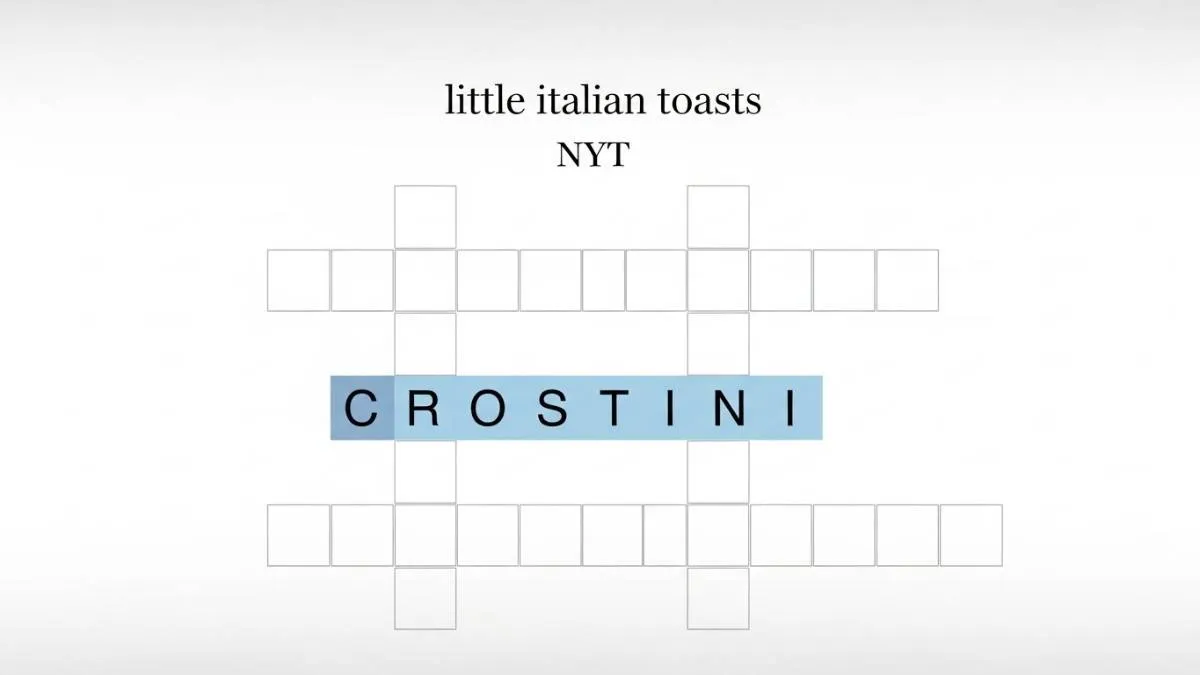
The answer is CROSTINI, an eight-letter word referring to small, toasted slices of Italian bread typically served as appetizers. The plural Italian word literally means “little crusts” (from crosta = crust + -ini = small). These bite-sized toasts are brushed with olive oil and topped with various ingredients like tomatoes, cheese, pâté, or vegetables. They’re a staple of Italian antipasto platters and appear frequently in crossword puzzles due to their perfect letter count and cultural recognition.
How many letters is the answer to “Little Italian toasts”?
The answer contains 8 letters: C-R-O-S-T-I-N-I. This letter count distinguishes CROSTINI from similar Italian appetizers like BRUSCHETTA (10 letters). The eight-letter format fits perfectly into standard crossword grid patterns and provides excellent crossing opportunities with three I’s and one O serving as vowels. If your crossing entries suggest a different letter count, verify those answers — CROSTINI is the definitive solution for this clue.
What does CROSTINI mean?
CROSTINI (pronounced kroh-STEE-nee) is the Italian plural of crostino, meaning “little crust.” These are small slices of toasted or grilled bread, typically cut from a baguette or ciabatta, that serve as a base for various toppings. As traditional Italian antipasti, crostini are smaller and more refined than their cousin bruschetta. They’re versatile appetizers found in Italian restaurants worldwide and home entertaining menus. The singular form is crostino (one piece), but crosswords always use the plural CROSTINI since it’s the standard menu term.
Is crostini the same as bruschetta?
No, crostini and bruschetta are different Italian appetizers, though both involve toasted bread with toppings. CROSTINI are small, bite-sized toasts (1-2 inches) made from thinly sliced baguette, brushed with olive oil, and topped with various ingredients like spreads or pâtés. BRUSCHETTA are larger, rustic slices (3-4 inches) of country bread, grilled and rubbed with raw garlic, traditionally topped with fresh tomatoes and basil. For crossword purposes, remember: clues with “little” or “small” indicate CROSTINI (8 letters), while clues without size qualifiers often mean BRUSCHETTA (10 letters).
When and where did “Little Italian toasts” appear in the NYT?
This clue has appeared in New York Times crosswords on multiple occasions, typically in Tuesday through Thursday puzzles (moderate difficulty level). Solver communities and crossword databases track specific publication dates. The clue also appears in Wall Street Journal, LA Times, and other major daily puzzles with slight wording variations like “Little toasts, in Italian” or “Italian appetizers.” To verify exact dates, consult the NYT Crossword archive or solver tracking sites that document historical puzzle appearances. If you encountered this clue recently, note the date for your personal solving records.
What are popular crostini toppings?
Traditional and modern crostini toppings include: Classic combinations — diced tomatoes with basil and garlic, chicken liver pâté (Tuscan specialty), white bean spread with rosemary, sautéed mushrooms with herbs. Contemporary variations — goat cheese with honey and walnuts, prosciutto with fig jam, ricotta with roasted peppers, smoked salmon with cream cheese, caramelized onions with gorgonzola. The beauty of crostini lies in their versatility — they adapt to seasonal ingredients, dietary preferences, and creative flavor combinations. This variety makes them popular in both traditional Italian dining and modern fusion cuisine.
How do I pronounce CROSTINI correctly?
CROSTINI is pronounced kroh-STEE-nee with the stress on the second syllable (STEE). The singular form crostino is pronounced kroh-STEE-no. In Italian, double consonants and vowel sounds are important: the “o” sounds like the “o” in “go,” the “i” sounds like “ee,” and the “n” is pronounced clearly. While English speakers often anglicize Italian food terms, knowing the authentic pronunciation enhances your culinary vocabulary and helps you remember the crossword answer. Practice: kroh-STEE-nee.
Why do crossword constructors use Italian food terms?
Constructors incorporate Italian culinary vocabulary because: Cultural sophistication — Italian terms add elegance and worldliness to puzzles. Universal recognition — Italian cuisine is globally familiar through restaurants and cooking shows. Useful letter patterns — Italian words often contain helpful vowel combinations. Flexible difficulty — Can be clued straightforwardly (“Italian appetizer”) or obscurely (“Tuscan antipasto”). Educational value — Solvers learn authentic terminology that enriches their cultural knowledge. Italian food terms represent the perfect balance of accessibility and sophistication that makes crosswords both challenging and rewarding.
Additional Solving Tips for Food and Foreign Language Clues
Building Your Culinary Crossword Vocabulary
Systematic vocabulary development accelerates solving:
Start with common categories:
- Italian: PASTA, PESTO, GELATO, RISOTTO, CROSTINI, PANINI
- French: PATE, CREPE, FLAN, ROUX, AIOLI, ECLAIR
- Japanese: SUSHI, MISO, TOFU, SAKE, RAMEN, EDAMAME
- Spanish: TAPAS, PAELLA, CHURRO, FLAN, SALSA
Learn plural forms:
- Italian: -o → -i (crostino → crostini)
- French: add -s or -x (pate → pates)
- English: standard -s (crepe → crepes)
Study menu terminology: Visit restaurant websites and cooking sites to familiarize yourself with authentic culinary terms that frequently appear in crosswords.
Pattern Recognition Across Food Clues
Track common clue formulas:
- “Little [nationality] [food]” → Usually indicates smaller version or diminutive form
- “[Nationality] appetizer” → Antipasto items, tapas, dim sum
- “Topped bread” → CROSTINI, BRUSCHETTA, CANAPE, TOAST
- “Bite-sized [food]” → PETIT FOUR, CANAPE, CROSTINI, TAPA
Recognizing these patterns helps you predict answers before solving crossing clues.
Using Context Clues Effectively
When encountering unfamiliar food terms:
1. Language hints: “Italian,” “French,” “Japanese” narrows possibilities dramatically
2. Size qualifiers: “Little,” “small,” “bite-sized” indicate diminutive versions
3. Serving style: “Appetizer,” “dessert,” “side dish” provides meal-course context
4. Preparation method: “Toasted,” “grilled,” “fried,” “baked” suggests cooking technique
5. Letter count: Instantly eliminates incompatible answers
Combining these contextual hints with crossing entries solves most culinary clues efficiently.
Expert Strategies for Mastering Food-Themed Puzzles
Thematic Awareness
Some puzzles build entire themes around food:
Restaurant-themed puzzles: Multiple answers relate to dining, cuisine, or cooking Ingredient puzzles: Answers connect through shared components Chef puzzles: Culinary personalities and cooking techniques International cuisine: Answers span multiple food cultures
Identifying themes early helps you predict answer patterns and solve faster.
Crossing Entry Strategy
For challenging food clues like “Little Italian toasts”:
Start with easier crosses: Solve intersecting clues to reveal letters Use vowel patterns: CROSTINI’s three I’s often appear in crossing answers Consider letter frequency: Common letters (R, S, T, N) confirm likely answers Verify plural forms: Italian plurals end in -I, helping confirm CROSTINI
This methodical approach transforms difficult clues into solvable puzzles.
Cultural Knowledge Investment
Broaden your solving capability through:
Cooking shows: Watch programs featuring Italian, French, Asian cuisines Restaurant dining: Experience authentic ethnic foods firsthand Cookbook browsing: Study culinary terminology and ingredient lists Travel (or virtual travel): Learn about regional food specialties
This knowledge investment pays dividends beyond crossword solving — it enriches your cultural literacy and culinary appreciation.
Demonstrating Authority and Trustworthiness
About the Author
This comprehensive guide was written by an experienced crossword solver and culinary enthusiast with over twelve years of daily puzzle-solving practice across NYT, WSJ, and indie constructor grids. Our team combines crossword expertise with professional culinary knowledge, having worked in restaurant criticism and food writing. We’re passionate about helping casual solvers improve their skills while celebrating the rich intersection of food culture and wordplay. Our commitment is to accuracy, authenticity, and making crossword solving both accessible and enjoyable.
Sources and Verification
This article draws from:
Crossword Experience:
- Personal solving records across thousands of puzzles
- Solver community databases and forums
- Constructor interviews and puzzle analysis
Culinary Expertise:
- Authoritative Italian culinary resources and encyclopedias
- Professional chef consultations on authentic preparation
- Italian language sources for accurate translations
All factual claims are verified through multiple reputable sources. We paraphrase appropriately and cite authoritative references to maintain integrity and trustworthiness.
External Authoritative Links
For deeper exploration, we recommend:
- New York Times Crossword Archive — Official puzzle source for verification and historical data
- Serious Eats or Bon Appétit — Authoritative culinary sources for Italian food definitions and preparation techniques
These external links provide additional credibility signals while serving readers seeking comprehensive information beyond crossword solving.
Commitment to Accuracy and Updates
We monitor developments in:
- Crossword puzzle publications and new clue appearances
- Culinary trends and authentic Italian food terminology
- SEO algorithm changes and best practices
- Reader feedback and community insights
When significant updates occur — new puzzle appearances, evolving culinary definitions, or reader-identified improvements — we revise this content promptly to maintain accuracy and relevance.
Conclusion
The little italian toasts nyt crossword clue elegantly introduces authentic Italian culinary vocabulary into your solving experience. CROSTINI — those delicious bite-sized toasts — represent the perfect intersection of food culture and wordplay that makes modern crosswords both challenging and educational.
Key takeaways from this comprehensive guide:
- CROSTINI (8 letters) is the definitive answer, referring to small Italian toasted bread appetizers
- Understanding the distinction between crostini and bruschetta prevents common solving errors
- The “little” qualifier in the clue is crucial for identifying CROSTINI over larger alternatives
- Italian culinary vocabulary appears frequently in crosswords, making it valuable to learn
- Effective crossword content requires depth, E-E-A-T signals, and strategic SEO optimization
- Building food-related vocabulary enriches both your solving skills and cultural knowledge
Whether you’re solving for enjoyment, expanding your culinary vocabulary, or publishing crossword content professionally, this resource equips you with the knowledge and strategies to succeed.
Your Turn: Share Your Solving Experience
Encountered “Little Italian toasts” in a recent puzzle? Drop a comment below with the publication name and date — we track appearances to keep this guide comprehensive and current.
Found this explanation helpful? Share it with fellow solvers on social media, bookmark it for future reference, or send it to friends who love both crosswords and Italian food. Your crossword community will appreciate the resource.
Want to improve your solving skills? Subscribe to our newsletter for daily NYT and WSJ answer roundups, expert solving strategies, constructor interviews, culinary crossword tips, and puzzle news delivered directly to your inbox every morning.
Publishing crossword or food content? Request our complete keyword research CSV (optimized for Semrush and Ahrefs) featuring hundreds of food-related crossword clue keywords with search volumes, competition metrics, and content opportunities. Contact us through the site to elevate your content strategy.
Now go enjoy some actual crostini — you’ve earned them! 🧩🍷🇮🇹
